Summary:
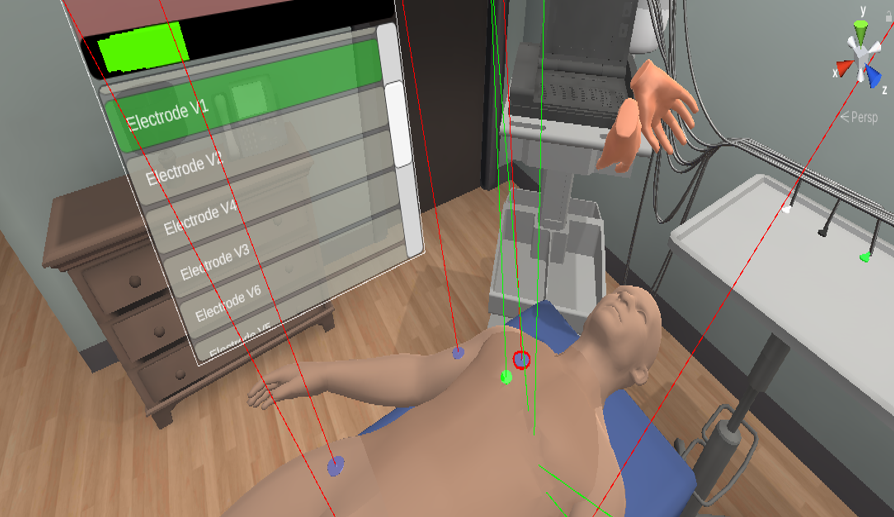
This project explores virtual reality as a training environment for electrocardiogram (ECG) procedures. It focuses on a participatory design process that brings clinical feedback into simulator development and evaluation.
The work examines a pipeline for creating a VR-based ECG training simulator and assessing its usability, content validity, and face validity. These assessments address how learners use the simulator, how well it represents the intended procedure, and whether its educational content fits the training task.
Research Focus:
The project investigates how clinical input can guide simulator design and how the same development and evaluation process may support other VR-based medical training applications.